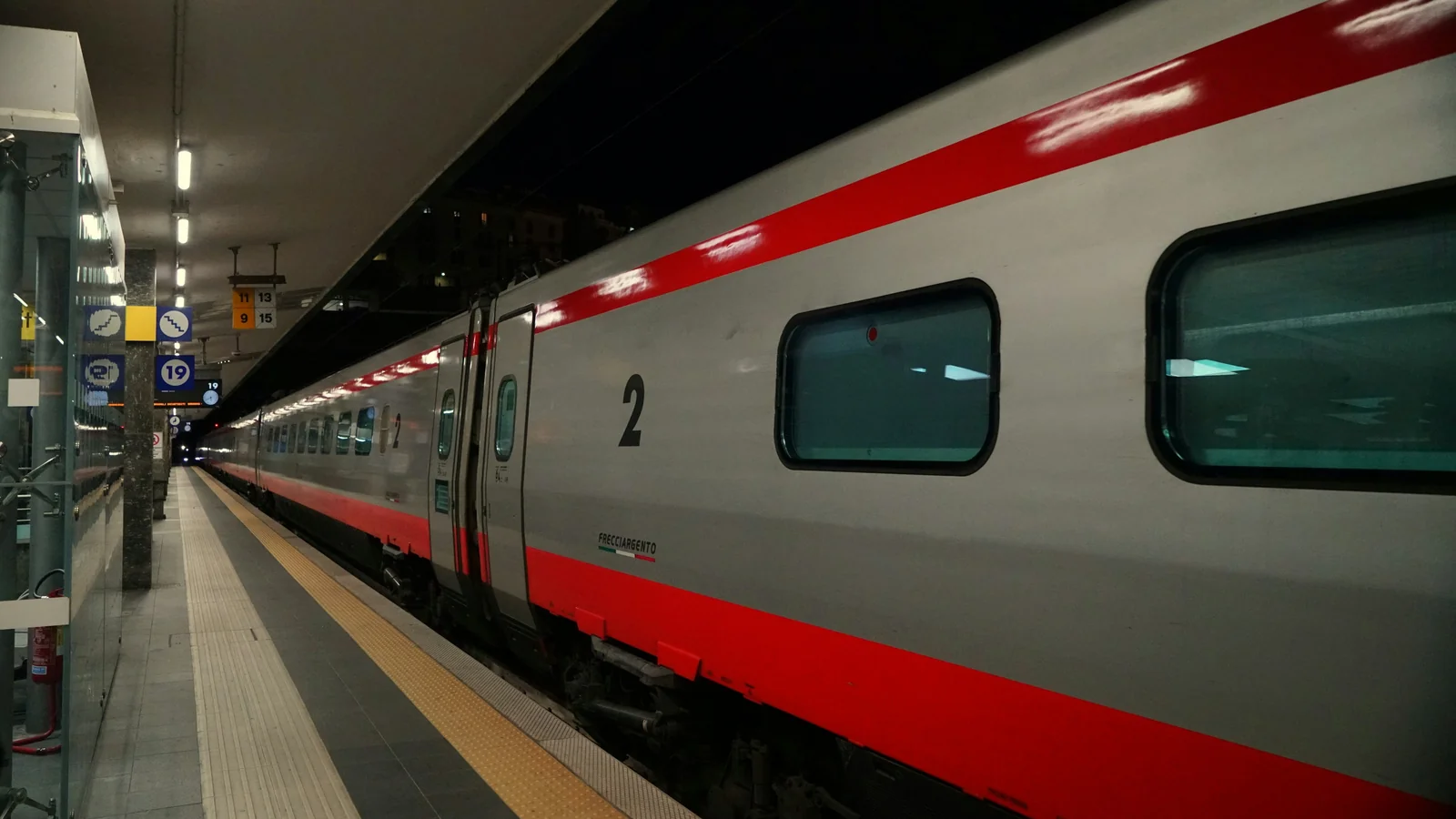
Rome to Venice Trains — Direct in 3 h 15
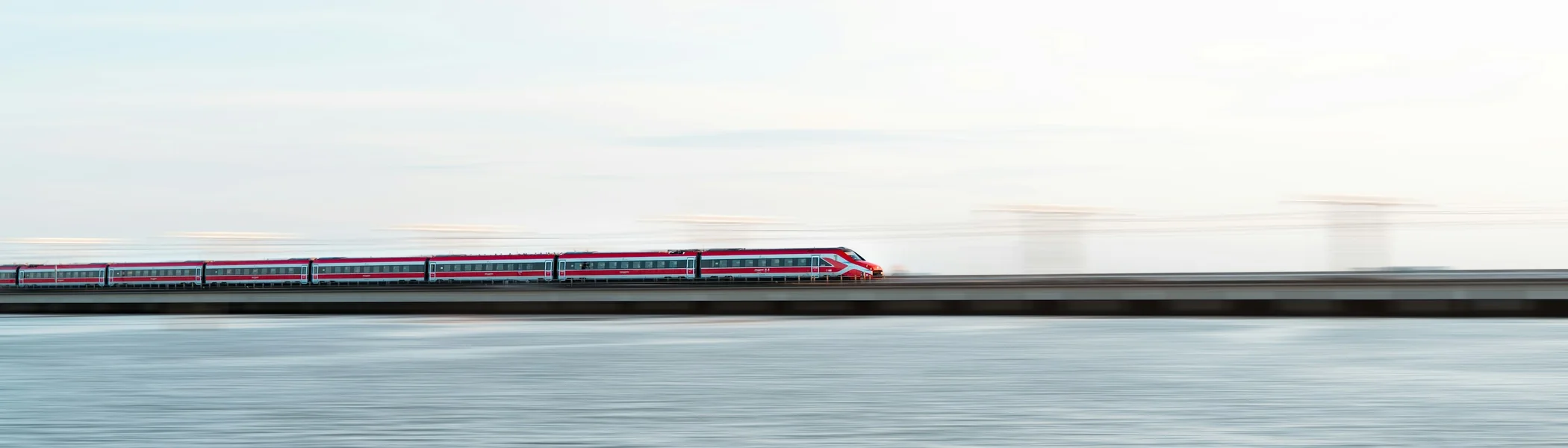
Rome to Venice is one of Italy's busiest high-speed routes, run by both Trenitalia's Frecciarossa and the private operator Italo. Direct trains at up to 300 km/h link Roma Termini with Venezia Santa Lucia in about 3 h 15 min, roughly 30 times a day, ending on the causeway across the Venetian Lagoon.
What are the Rome to Venice trains?
The Rome to Venice trains are the direct high-speed services run by Trenitalia's Frecciarossa and the private operator Italo, connecting Roma Termini with Venezia Santa Lucia in about 3 h 15 min at up to 300 km/h. Between them the two operators run roughly 30 direct departures a day along the Rome–Florence–Bologna–Venice high-speed spine. If you want clear detail on times, classes, fares and booking, this guide is for you.
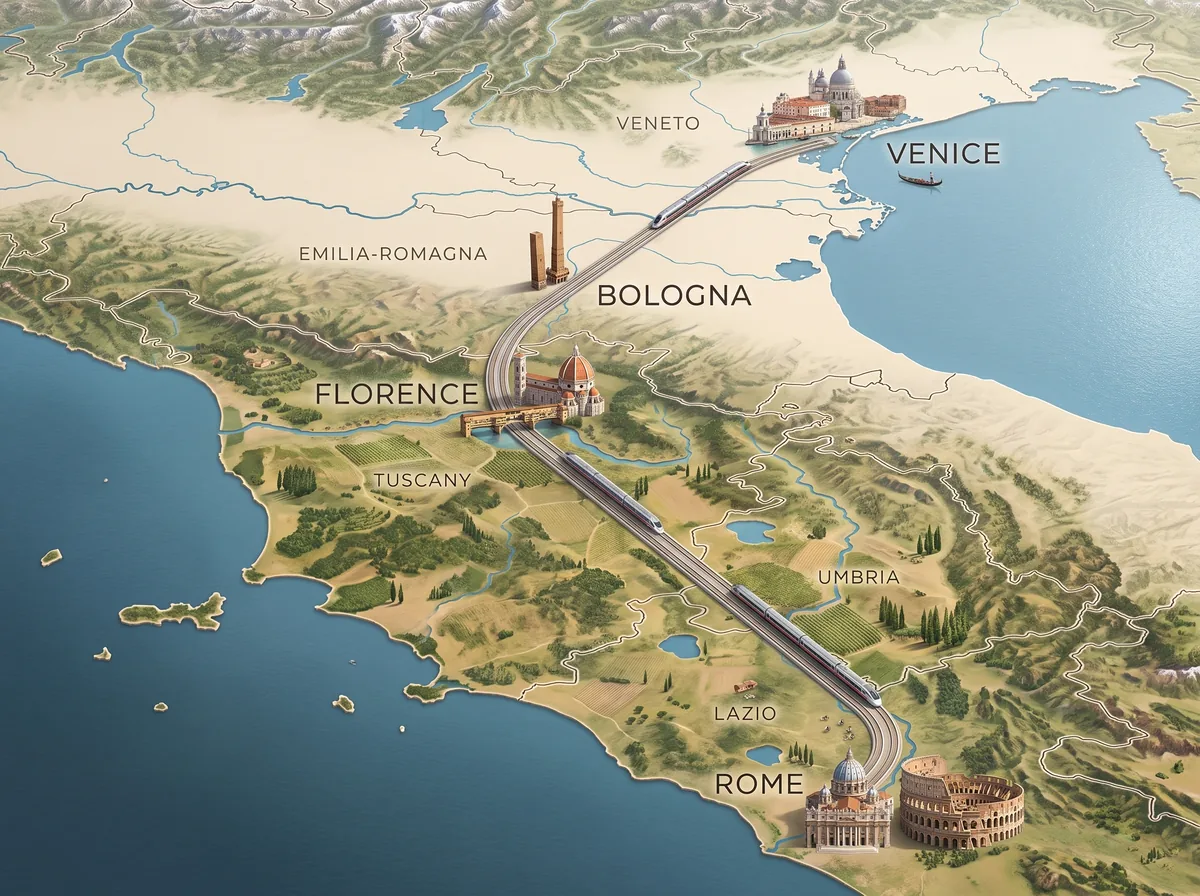
The line follows Italy's premier high-speed corridor as far as Padua before the final run across the lagoon into Venice. Frecciarossa is operated by Trenitalia, while Italo is run by NTV Italo; the two compete on the same tracks, which helps keep fares competitive. Below are the details that matter for the journey: operators, real travel times, stops, seat classes on both services, onboard facilities, accessibility, luggage and practical booking tips.
Against the alternative, the train wins comfortably. A Rome–Venice flight is about 1 h 10 min in the air, but with transfers to Fiumicino and Marco Polo, check-in and security it usually becomes a 4-hour-or-more door-to-door trip and lands you 13 km from Venice; the train is faster in practice and delivers you straight to Venice's historic island centre. Driving the ~530 km takes over 5 hours plus costly mainland parking, since cars cannot enter Venice at all. For most trips the train is the fastest, most cost-effective and least complicated way to reach Venice's island terminal.
Two operators, one line
Frecciarossa and Italo both run the Rome–Venice high-speed route, so you can compare fares and times on the same day.
Straight onto the islands
Trains terminate at Venezia Santa Lucia on the Grand Canal in the historic centre, unlike the airport 13 km away on the mainland, so you step straight into Venice on foot or by vaporetto.
Florence and Bologna en route
Most trains stop at Florence and Bologna, making an easy stopover between the two endpoints, and Italy's rail network makes it simple to continue to nearby towns.
Rome to Venice train times and stops
Direct high-speed trains leave Rome for Venice once or twice an hour and take about 3 h 15 min — less than three and a half hours on the fastest services; most call at Florence, Bologna and Padua on the way. Below are the key legs and connections along the corridor. Times are the fastest scheduled services on Frecciarossa or Italo.
| Leg | Fastest time | Operator / note |
|---|---|---|
| Rome – Venice (direct) | 3 h 15 min | Frecciarossa / Italo high-speed |
| Rome – Florence | 1 h 32 min | High-speed, popular stopover |
| Rome – Bologna | 2 h 05 min | High-speed |
| Florence – Venice | 2 h 05 min | High-speed via Bologna |
| Bologna – Venice | 1 h 25 min | High-speed via Padua |
| Padua – Venice | 25 min | Final lagoon crossing |
| Rome – Venice (Italo) | 3 h 20 min | Italo, often lower fares |
| Rome – Venice (Intercity) | 5 h 30 min | Cheaper, no high-speed line |
Venezia Santa Lucia is a terminus on the Grand Canal; do not confuse it with Venezia Mestre on the mainland, one stop earlier. Compare live Frecciarossa and Italo times and fares at highspeedtrains.com.
Book your route ↗Rome and Venice train stations
Rome to Venice is a single high-speed line with a fixed pair of city terminals, but the exact Rome station can vary by train. Around 30 direct trains run each way daily — roughly one or two an hour from about 06:00 until the early evening — so you rarely wait long. Here is where you leave, where you arrive, and the stops in between.
Departing Rome — Roma Termini
Most Frecciarossa services and all Italo trains to Venice leave from Roma Termini, the central hub on metro lines A and B with taxi ranks, ticket desks, cafés and left-luggage right by the platforms.
Some trains use Roma Tiburtina
A few Frecciarossa departures start from or also call at Roma Tiburtina in the north-east (metro line B). It is not always the same Rome station, so check which one your ticket shows before you set off.
Arriving — Venezia Santa Lucia
Every direct high-speed train, Frecciarossa and Italo alike, terminates at Venezia Santa Lucia on the Grand Canal in the historic centre. Vaporetto water-bus and water-taxi jetties are right outside the station doors.
Not Venezia Mestre
Venezia Mestre, one stop earlier on the mainland, is a different station. Some cheaper or Intercity tickets end there and need a local train or bus into Venice, so for the island always confirm your ticket reads Santa Lucia.
Stops along the way
Direct trains call at Firenze Santa Maria Novella, Bologna Centrale and Padova (Padua). Each is a possible stopover or a shorter-leg boarding point if you are not travelling the full Rome–Venice run.
How many departures
Frecciarossa and Italo together run about 30 direct trains a day in each direction, clustered roughly hourly through the morning and afternoon, with the last direct services in the early evening.
Lounges & left luggage
Both terminals have staffed ticket desks, machines and left-luggage (deposito bagagli). Frecciarossa Business and Executive fares include FRECCIALounge access at Roma Termini and other major stations.
Boarding & platforms
High-speed platforms (binari) appear on the departure boards shortly before boarding, so arrive 20–30 minutes early, especially at busy Termini. Your ticket is valid only for the booked train and seat — there is nothing to validate.
Rome to Venice train seat classes
On the Frecciarossa the route offers four classes — Standard, Premium, Business and Executive; Italo has its own Smart, Comfort, Prima and Club Executive tiers at similar levels. Typical Rome–Venice fares are shown for Frecciarossa; prices are dynamic and rise as trains fill, so book early for the lowest tiers.
Standard
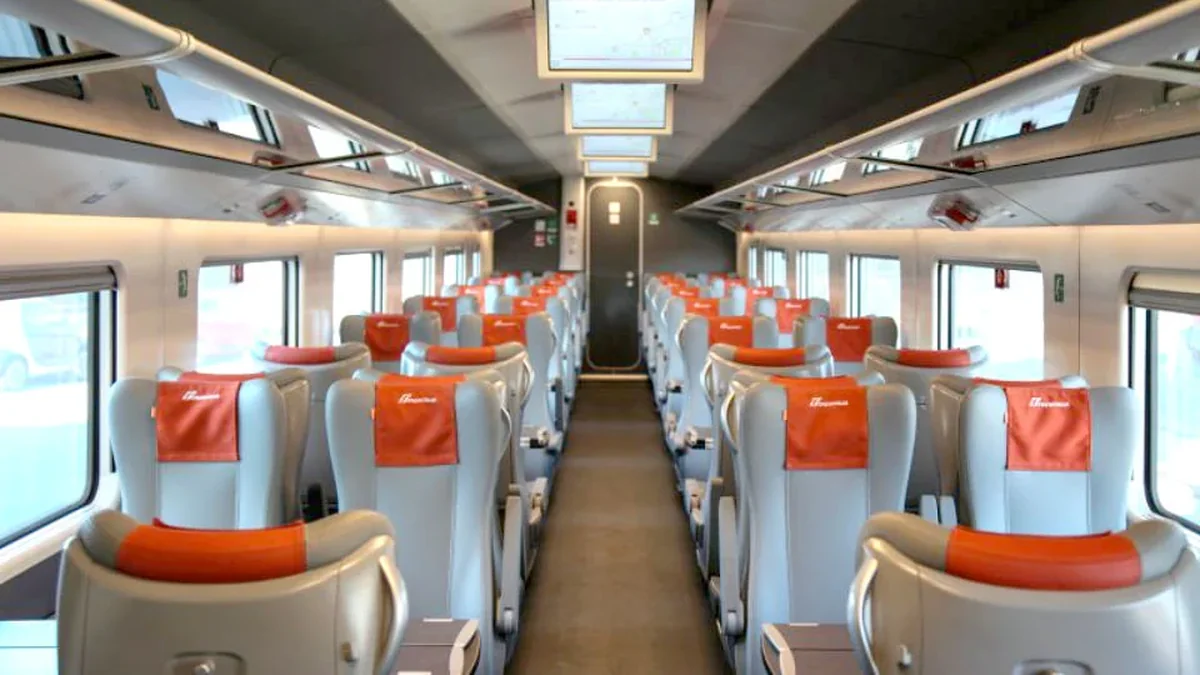
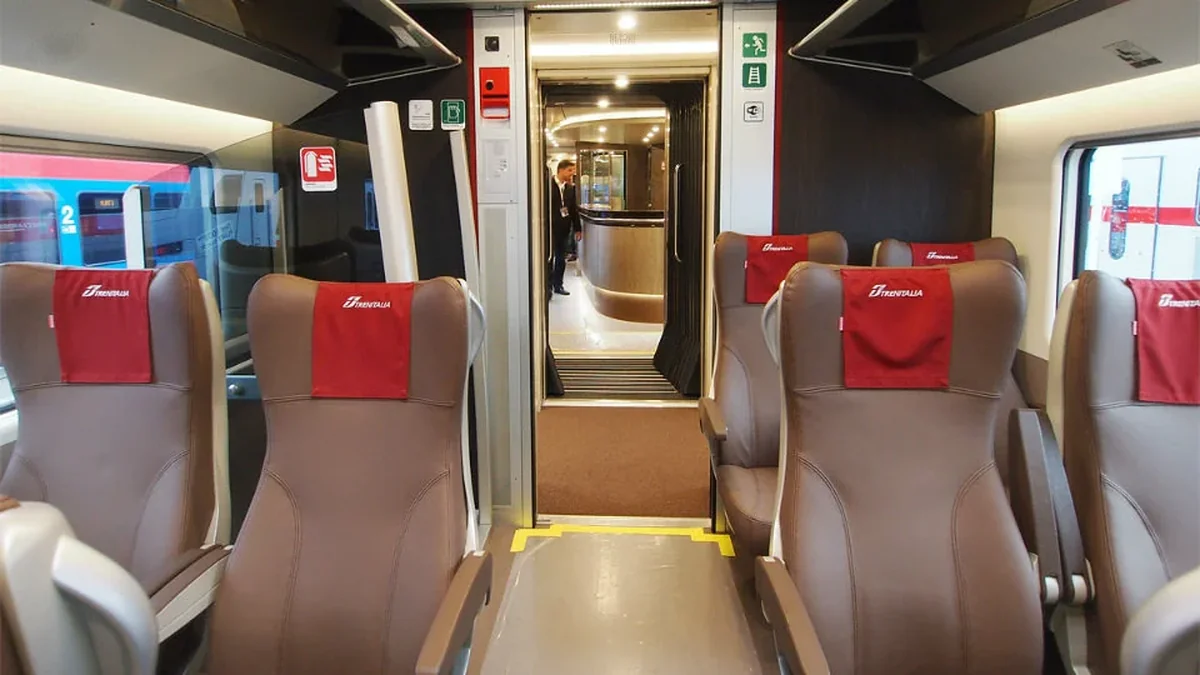
The best-value option: comfortable 2+2 seating with generous legroom, from around €25–€90 Rome–Venice depending on how far ahead you book. Fine for the three-hour run, with air conditioning, a power socket at every seat and WiFi throughout.
- 2+2 seating, tables at some bays
- Power socket at every seat
- Free WiFi and entertainment portal
Premium
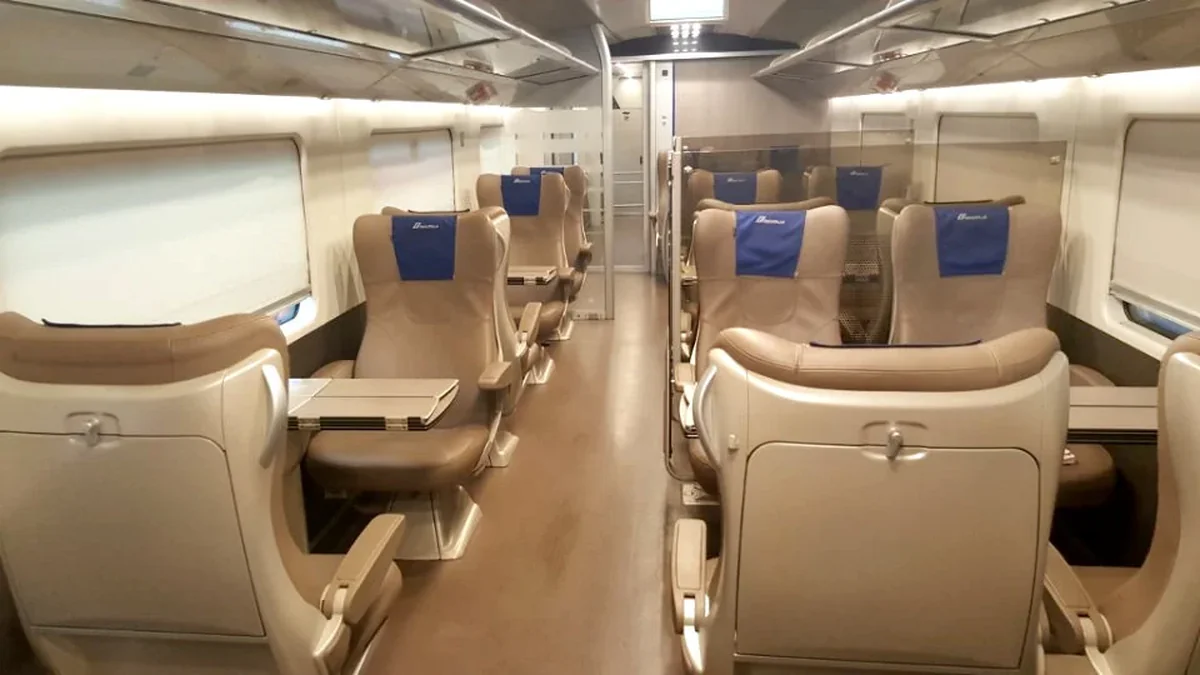
The same 2+2 layout as Standard in a quieter coach, with a welcome drink and snack at your seat. Usually only a few euros more than Standard on Rome–Venice, which makes it an easy upgrade for a little extra calm.
- Welcome drink and snack included
- Quieter 2+2 leather seating
- Best value-per-euro upgrade
Business
Wider seats in a 2+1 layout with more recline and workspace, plus at-seat welcome service, typically €55–€120 Rome–Venice. Some trains offer the private Salottino four-seat compartment for a small supplement.
- 2+1 layout with wider seats
- Welcome drink and snack service
- Salottino compartments on many trains
Executive
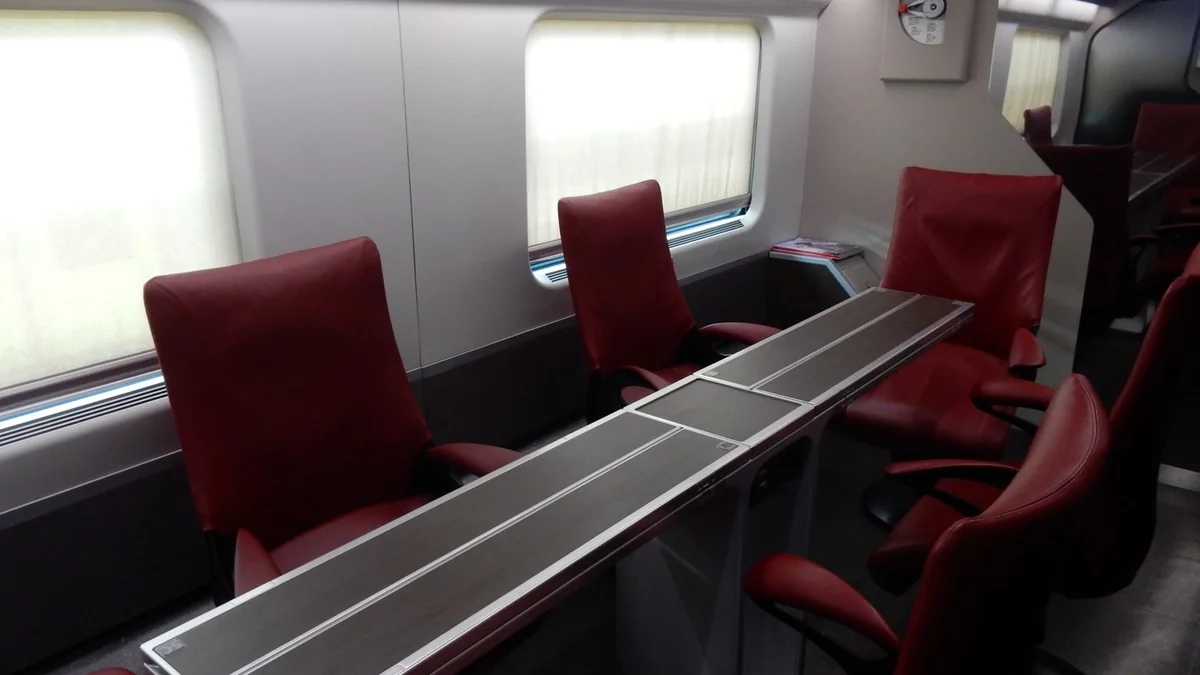
A near-private coach of about ten reclining leather armchairs, with at-seat meal service — breakfast is served at your seat on morning departures — and FRECCIALounge access at Rome, Bologna and other major stations. Sold at flexible fares, typically €150–€230 Rome–Venice.
- Armchair seating in a quiet coach
- Complimentary meal served at seat
- Station lounge access included
Rome to Venice train booking and travel tips
Fares on this route are fully dynamic and two operators compete for your booking, so a little know-how saves real money. These tips hold true across Frecciarossa and Italo.
Compare Frecciarossa and Italo together
Both run the Rome–Venice line at similar speeds and times, but prices differ by departure and day. Italo trains can start from around €29.90 on Low-cost fares, while Frecciarossa's Super Economy may be higher on the same date; Frecciarossa runs more trains and the only Executive class. Always check both operators for your exact date to reach Venice at the best fare rather than assuming one is cheaper.
Book 2–4 weeks ahead for the cheapest fares
The lowest Super Economy and Low-cost tickets, starting around €19.90 a few months out, are released early and sell first. Midweek and midday trains are cheapest; Friday and Sunday evenings and summer weekends are dearest and can sell out. Prices climb steadily toward departure, so early booking is the single biggest saving.
Get off at Santa Lucia, not Mestre
Venezia Santa Lucia is the terminus on the Grand Canal, in the heart of Venice and a short walk or vaporetto ride from the sights; Venezia Mestre is on the mainland one stop earlier. Some cheaper tickets only go to Mestre, from where you need a local train or bus. For Venice itself, always confirm your ticket reads Santa Lucia.
Understand the fare types before you buy
Frecciarossa sells Super Economy (cheapest, non-refundable, non-changeable), Economy (changeable for a fee) and Base (flexible, refundable). Italo's equivalents are Low-cost, Economy and Flex. If your plans might change, the small premium for a flexible fare is cheaper than losing a Super Economy ticket entirely; a round trip suits fixed return dates, while flexible singles are better if plans may shift.
Consider a Florence or Bologna stopover
Because most trains stop at Florence and Bologna, you can break the journey for a day at little extra cost by booking two legs. Florence in particular turns a transfer into a highlight. Just leave enough time between trains, as high-speed services are punctual but tightly scheduled.
Know the honest limitations
Scenery is underwhelming for most of the trip: long tunnels through the Apennines and flat plains, with the lagoon crossing the only real highlight. Luggage racks fill on busy departures, so board early and arrive at the station 20–30 minutes before departure. WiFi can drop in tunnels, and the Rome–Florence–Bologna corridor is congested, so delays of 10–20 minutes do happen at peak times.
Onboard facilities Rome to Venice
Both Frecciarossa and Italo run modern 300 km/h trains with the same core comforts, plus extras that step up with the class you choose. Here is what to expect for the three-hour journey.
WiFi & entertainment
Free WiFi is available on every Frecciarossa and Italo train after a quick sign-in, along with an onboard portal of films and journey info. Expect the signal to drop in the long Apennine tunnels between Florence and Bologna.
Power at every seat
Every seat on both operators has a power socket, and many have USB charging too, so you can keep phones and laptops topped up for the full three-hour run without hunting for an outlet.
Bar and bistro car
Frecciarossa has the FRECCIABistrò café-bar for espresso, wine and panini; Italo has vending and at-seat service in higher classes. Neither is a full restaurant, so bring your own food if you want a proper meal.
Quiet areas
Both operators offer a quiet coach or zone where phone calls are discouraged. On Frecciarossa look for the Area Silenzio; on Italo the equivalent is the low-noise Relax carriage, worth requesting when you book.
Luggage space
No weight limit or fees: stow your own bags on overhead racks, end-of-car stands and mid-coach shelves. There is no checked-luggage service, so keep valuables with you and board early on full trains.
Premium extras
Business, Executive, Prima and Club Executive add welcome drinks, meals and station lounge access. Executive and Club Executive are near-private coaches at the quiet end of the train, ideal if you want to work or rest.
Accessibility
Both trains carry wheelchair spaces with companion seats and accessible toilets. Free boarding assistance is arranged through Trenitalia's Sala Blu or Italo's assistance service, ideally booked around 24 hours ahead.
The lagoon arrival
The journey's highlight comes at the end: the causeway across the Venetian Lagoon into Santa Lucia, with water on both sides. It is the same view from every seat, so no need to pay for a particular side.
Rome to Venice trains — frequently asked questions
The questions travellers ask most before booking Rome to Venice, answered directly. If your question isn't here, live times and fares for the route are a search away.
Book ticketsHow long is the train from Rome to Venice?
The fastest direct high-speed trains cover Rome to Venice in about 3 hours 15 minutes, running non-stop or with a single stop at Florence, Bologna and Padua. Both Trenitalia's Frecciarossa and the private operator Italo run the route, with roughly 30 departures a day between them.
Is there a direct train from Rome to Venice?
Yes, direct trains between Rome and Venice run all day. Frecciarossa and Italo both run frequent direct high-speed trains from Roma Termini to Venezia Santa Lucia, the station on the islands of Venice itself; some Frecciarossa services also call at Roma Tiburtina. No change is needed; slower Intercity trains also run the route but take five hours or more.
Which stations do Rome to Venice trains use?
In Rome most trains leave from Roma Termini, the central hub, though some Frecciarossa services start from or also call at Roma Tiburtina — so check which station your ticket shows. In Venice every direct high-speed train arrives at Venezia Santa Lucia on the Grand Canal in the historic centre, not Venezia Mestre on the mainland, where some cheaper or Intercity tickets terminate.
How much is a train ticket from Rome to Venice?
Advance high-speed fares start around €19.90 on Frecciarossa Super Economy and €29.90 on Italo Low-cost if booked weeks ahead. Walk-up and same-day prices are typically €70–€100 in standard class. Business and Executive class cost more, while Italo often undercuts Frecciarossa on the same departures.
Which is better, Frecciarossa or Italo, from Rome to Venice?
Both are modern 300 km/h trains with similar journey times and comfort. Frecciarossa runs more departures and has a four-class range up to Executive; Italo is often a little cheaper and has its own Smart, Comfort, Prima and Club Executive classes. Compare both on the day, as prices swing with demand.
Does the Rome to Venice train stop in Florence?
Most Rome to Venice high-speed trains stop at Firenze Santa Maria Novella and Bologna Centrale, and many also call at Padova. A few peak services run non-stop or with fewer stops, shaving time. Florence makes a popular stopover, and a stopover ticket can cost little more than a direct fare.
Do I need to book Rome to Venice train tickets in advance?
Booking ahead is strongly recommended. High-speed fares are dynamic, so the cheapest Super Economy and Italo Low-cost tickets sell out first and prices climb toward departure. For summer weekends and holidays, book two to four weeks ahead to secure both a seat and a low fare.
Which side of the train has the best views to Venice?
The scenery is mostly tunnels and plains until the finale, when every seat gets the same spectacular view: the causeway across the Venetian Lagoon into Venezia Santa Lucia, with open water on both sides. For the Apennine and Tuscan stretches, the right-hand side heading north has slightly better hill views, and the route crosses Italy almost coast to coast before the final approach to Venice.
Can I take luggage on the Rome to Venice train?
Yes, luggage is free with no weight limit on both Frecciarossa and Italo; you carry and stow your own bags on overhead racks and end-of-car stands. There is no checked-baggage service. Board early on busy departures, as luggage racks fill quickly and Venezia Santa Lucia is a terminus where everyone alights. You can compare fares and book at highspeedtrains.com.
Ready to ride from Rome to Venice?
Compare Frecciarossa and Italo schedules, classes and fares for the direct high-speed route to the lagoon.
Book Rome–Venice Tickets ↗